5 Things a Marvel Rivals Spectate Reveals About Being Hardstuck in Grandmaster
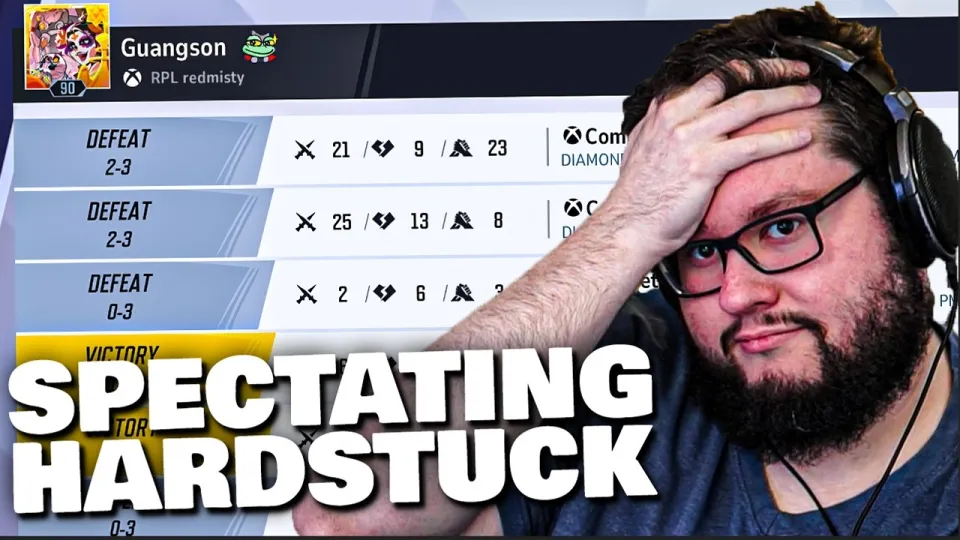
Video: I Spectated Someone Who Claimed To Be Hardstuck In Marvel Rivals
Need articles like this for your video? They help promote it on YouTube and Google — order them in the Telegram bot @sat_sit_bot. It writes articles around your video, embeds the video and publishes them on popular niche websites (no ads). Free trial — 50 articles.
· based on the channel Flats
Key takeaways
- A self-described hardstuck Marvel Rivals player asked for a live spectate review and turned out to be in Grandmaster, not a low rank.
- The player mained Spider-Man before switching to Cloak & Dagger and played the Dagger half almost exclusively.
- He blamed teammates and matchmaking for losses while running a negative win rate across a large sample of ranked games.
- Flats' review found basic errors: skipped health packs, wasted invisibility, no damage contribution and poor ultimate usage.
- The breakdown aired on the Flats channel, which posts spectate reviews and ranked analysis for Marvel Rivals and Overwatch.
Marvel Rivals ranked complaints usually follow the same script: the teammates are bad, the matchmaking is rigged, and the rank is somehow stuck. A spectate review on the Flats channel tested that claim directly, following a player who insisted he was hardstuck and could not climb. The verdict was blunt: the rank was Grandmaster, the win rate was negative, and almost every problem the player blamed on his team was visible in his own gameplay. The full review is archived on Flats' Twitch channel, where the live spectates and ranked sessions happen.
What the Marvel Rivals hardstuck spectate actually showed
The player opened by claiming his teammates were the reason he could not climb, and the review immediately reframed the question. Rank mattered first: this was not a Bronze or Silver player fighting uphill matchmaking, but a Grandmaster-level account with a losing record over a meaningful number of games. In Marvel Rivals, a negative win rate across a large sample is the clearest possible signal that personal impact, not luck, is the limiting factor.
The session then walked through the player's hero history. He described himself as a Spider-Man main, a detail that explains a lot about his habits: dive-oriented positioning, a preference for flanking, and a tendency to treat every fight as a solo play. When Spider-Man stopped working, he moved to Cloak & Dagger, a support pick with two distinct halves. That switch is where the review found its richest material.
Cloak & Dagger played as Dagger only
The most repeated observation of the whole breakdown was that the player was effectively playing half a hero. Cloak & Dagger is a stance-switching support: Dagger heals, pokes and controls space with light energy, while Cloak brings damage, the terror cape and the invisibility that lets the pair escape or reposition. Using only the Dagger half throws away a large share of the kit's value.
Specific habits the review flagged:
- Invisibility was treated as a passive buff rather than a tool — it was never used to escape a losing fight, bait an ultimate or reset a flank.
- Healing output was low for a support, and damage output was close to zero, so the pick contributed neither sustain nor pressure.
- Ultimate usage was hesitant; the review pointed to at least one ultimate that achieved nothing because it was cast into a fight that was already lost.
- Positioning stayed static in the backline, which made the player easy to dive and forced the rest of the team to peel.
A support who heals a little and damages not at all is not a neutral pick. It is a roster slot that produces nothing while the enemy support is doing both jobs.
The health pack moment and other basics
The single most damning sequence in the review had nothing to do with hero mastery. The player walked directly past a health pack while looking for a health pack, a mistake that needs no game knowledge to diagnose. Reviews like this one tend to find the same foundation problems over and over:
- Resource awareness: health packs, spawn timers and ultimate charge go untracked.
- Ultimate economy: ultimates are pressed because they are ready, not because they will win a fight.
- Fight selection: the player engages when he is out of position and disengages when his team needs him.
- Accountability: every death gets assigned to a teammate instead of reviewed.
None of these require Grandmaster mechanics to fix. They require watching a replay and asking what could have been done differently, which is exactly what the spectate format forces.
Why Grandmaster egos hold players back in Marvel Rivals
Marvel Rivals' rank distribution is generous at the top compared to many hero shooters, and that shapes the culture. Players reach Diamond and Grandmaster on a positive run, then assume the rank reflects a skill level they have not actually consolidated. When the climb stalls, the explanation has to be external: bad teammates, unfair matchmaking, a broken meta.
The problem is that this explanation is unfalsifiable, and it removes the only lever the player controls. A player who believes his teammates are the issue stops reviewing his own deaths, stops learning the second stance of his hero, and stops noticing the health pack he just walked past. The spectate review works because it makes that contradiction visible in real time, in front of an audience.
Typical questions viewers ask after a Marvel Rivals spectate
Spectate reviews always generate the same pushback, and it is worth addressing directly. The most common argument is that teammates really can hold a player back — and they can, in individual matches. Over a hundred games, the effect washes out. A negative win rate over a large sample is not bad luck; it is the average outcome of that player's decisions.
The second argument is that rank shaming is unfair because Grandmaster is a high rank. It is a high rank, and that is precisely why the review is useful: the mistakes on display are not exotic. They are the same fundamentals that separate a stable Grandmaster from a player who peaked there. The third argument is hero choice — that Cloak & Dagger, Rocket or Spider-Man are simply weak. The review's answer is consistent: the hero was not the problem, the way the hero was played was.
Where to watch the full Flats breakdown and follow the channel
The complete spectate is available through the Flats channel, which covers Marvel Rivals ranked reviews, hero analysis and live coaching sessions. Beyond Twitch, the channel runs a Discord community and short-form clips:
- Twitch: https://www.twitch.tv/flats
- Discord: https://discord.gg/flats
- Twitter: https://twitter.com/Flats_Ow
- TikTok: https://www.tiktok.com/@flats_ow
- Facebook: https://www.facebook.com/FlatsTTV
Final verdict on the hardstuck Marvel Rivals claim
The spectate answered the question it was asked: the player was not hardstuck because of teammates, matchmaking or the meta. He was hardstuck because he played one half of a two-stance hero, skipped health packs, wasted ultimates and assigned blame outward. The rank was real, the win rate was negative, and the fixes are all mechanical and reviewable. Flats, the author of this video breakdown, closes the loop by showing that the fastest route out of a plateau is a replay you are willing to watch honestly — and the live sessions on Flats' Twitch channel are where those reviews happen first.
Questions & answers
Can teammates really hold you back in Marvel Rivals ranked?
In a single match, yes — one player having a bad game can decide the result. Over a large sample of games, individual variance evens out on both sides, so a negative win rate across many matches reflects the player's own average impact. The spectate review makes this point by showing that the mistakes were repeatable, not situational.
Is Grandmaster actually a high rank in Marvel Rivals?
It sits near the top of the competitive ladder, which is why a Grandmaster-level player blaming teammates drew so much attention. Reaching that rank takes real skill, but holding it requires consolidated fundamentals: resource management, ultimate economy and knowing the full kit of your hero. The review found those fundamentals missing.
Why is playing only Dagger half of Cloak & Dagger a problem?
Cloak & Dagger is designed as a stance-switching support, and each half covers what the other lacks. Sticking to Dagger means giving up Cloak's damage, terror cape and invisibility, which are the tools that let the pair escape dives and set up plays. The result is a support who neither sustains nor pressures.
What should a hardstuck player do first to start climbing?
Watch a replay of a lost match and count your own unforced errors before looking at anyone else's play. Start with health pack awareness, ultimate timing and whether you are using your hero's full kit. Fixing those basics usually moves a player faster than switching heroes or blaming matchmaking.
Source: I Spectated Someone Who Claimed To Be Hardstuck In Marvel Rivals · Markdown version